

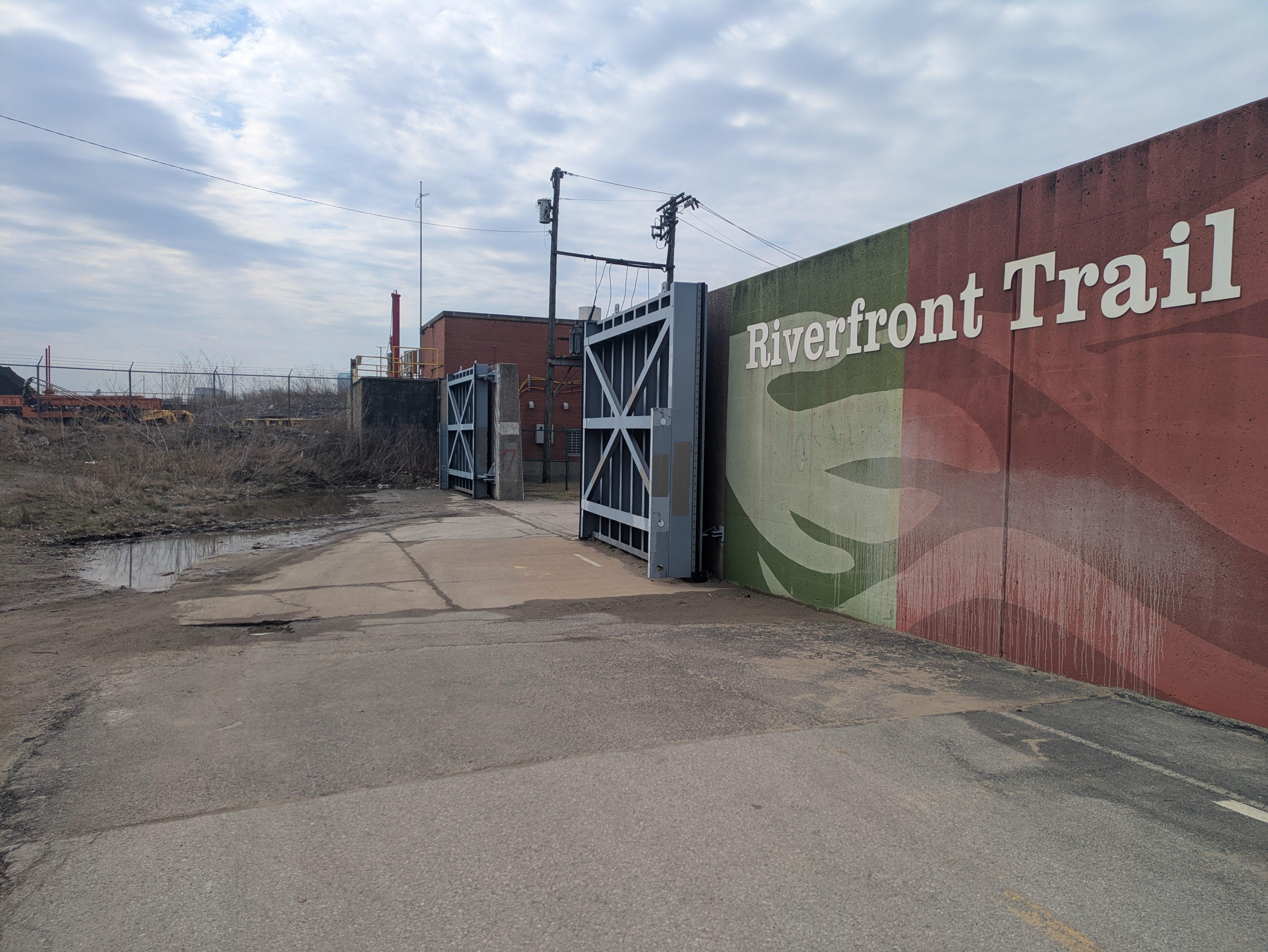
There’s an incredible running trail in St. Louis. It’s called the North Riverfront Trail, and it winds along the majestic Mississippi River. I have a difficult time getting anyone to come with me, however.
Reads one online review: “It smelled like human excrement, couldn’t see the river because of flood walls, felt extremely unsafe.”
Don’t let that stop you. Just be sure not to trip over the shell casings!
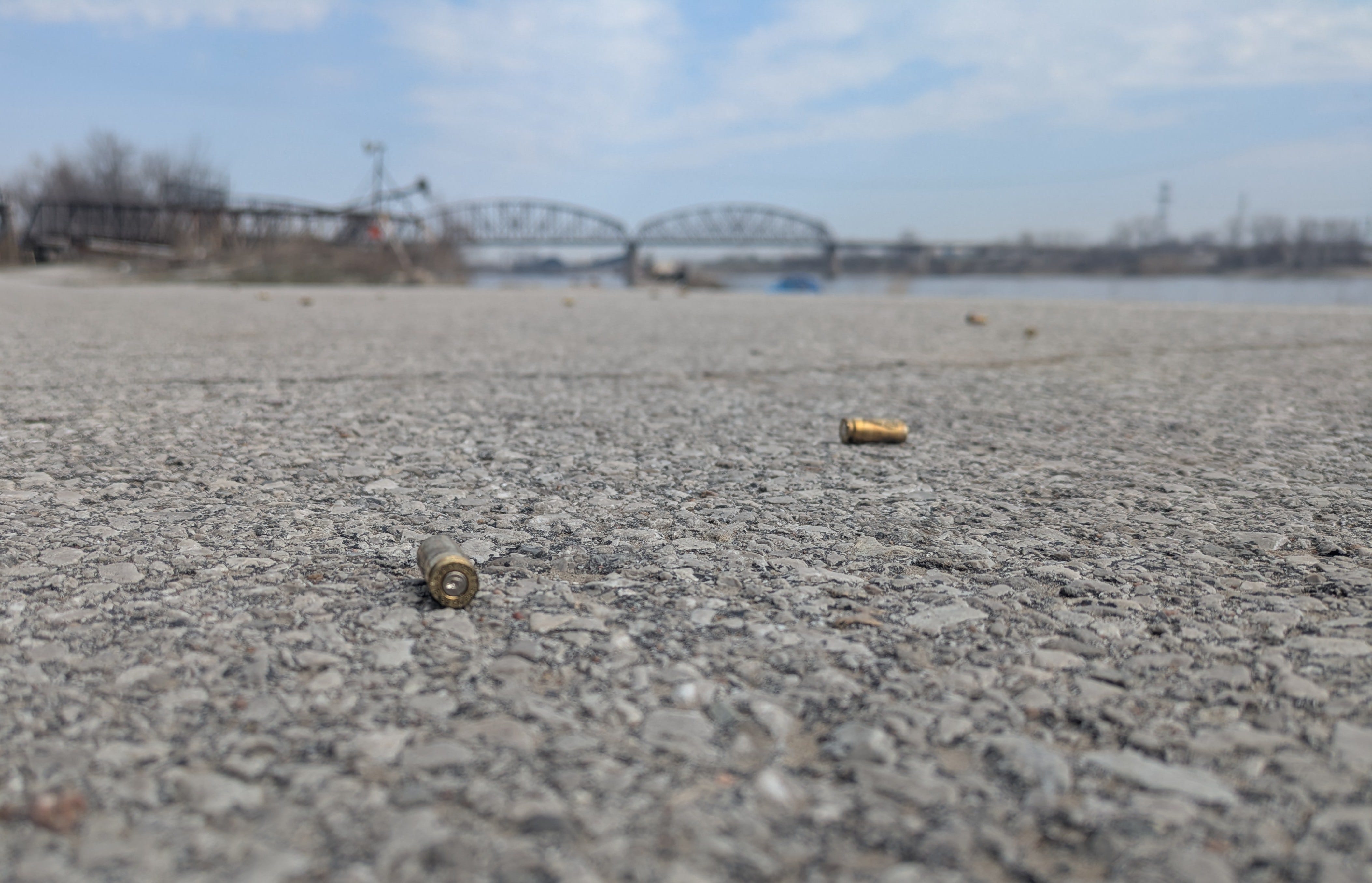
Seriously, though, I love it, 11 miles of uninterrupted trail from the Arch to the Chain of Rocks bridge, perfect for tempo training. Sure, flood walls block the river for the first couple of miles, but eventually it opens up and you get great views: The river to your right, industrial squalor to your left.
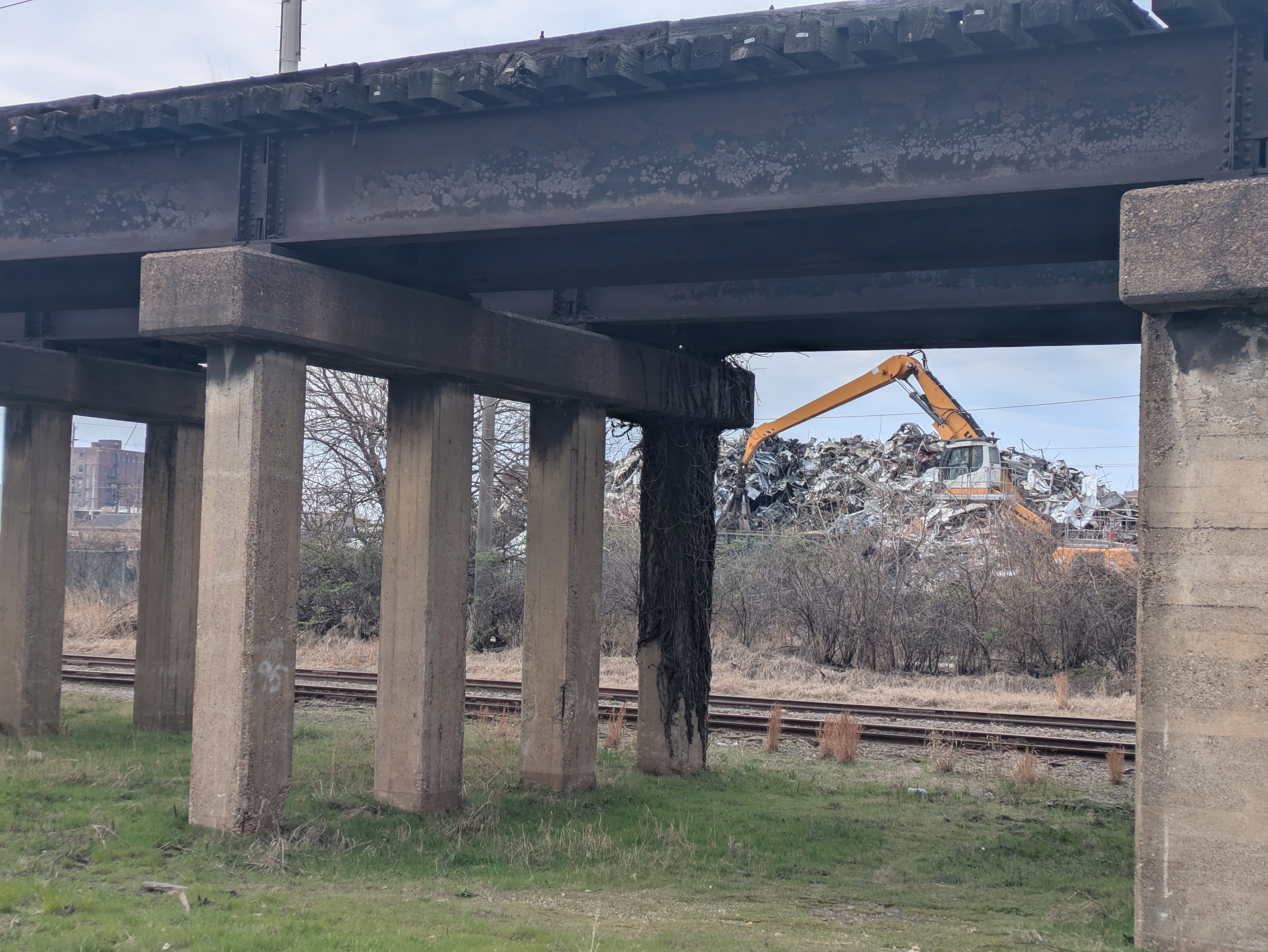
There are car salvage yards, a cement plant, some beautiful bridges, abandoned train cars, and river cargo being transported on conveyor belts above.
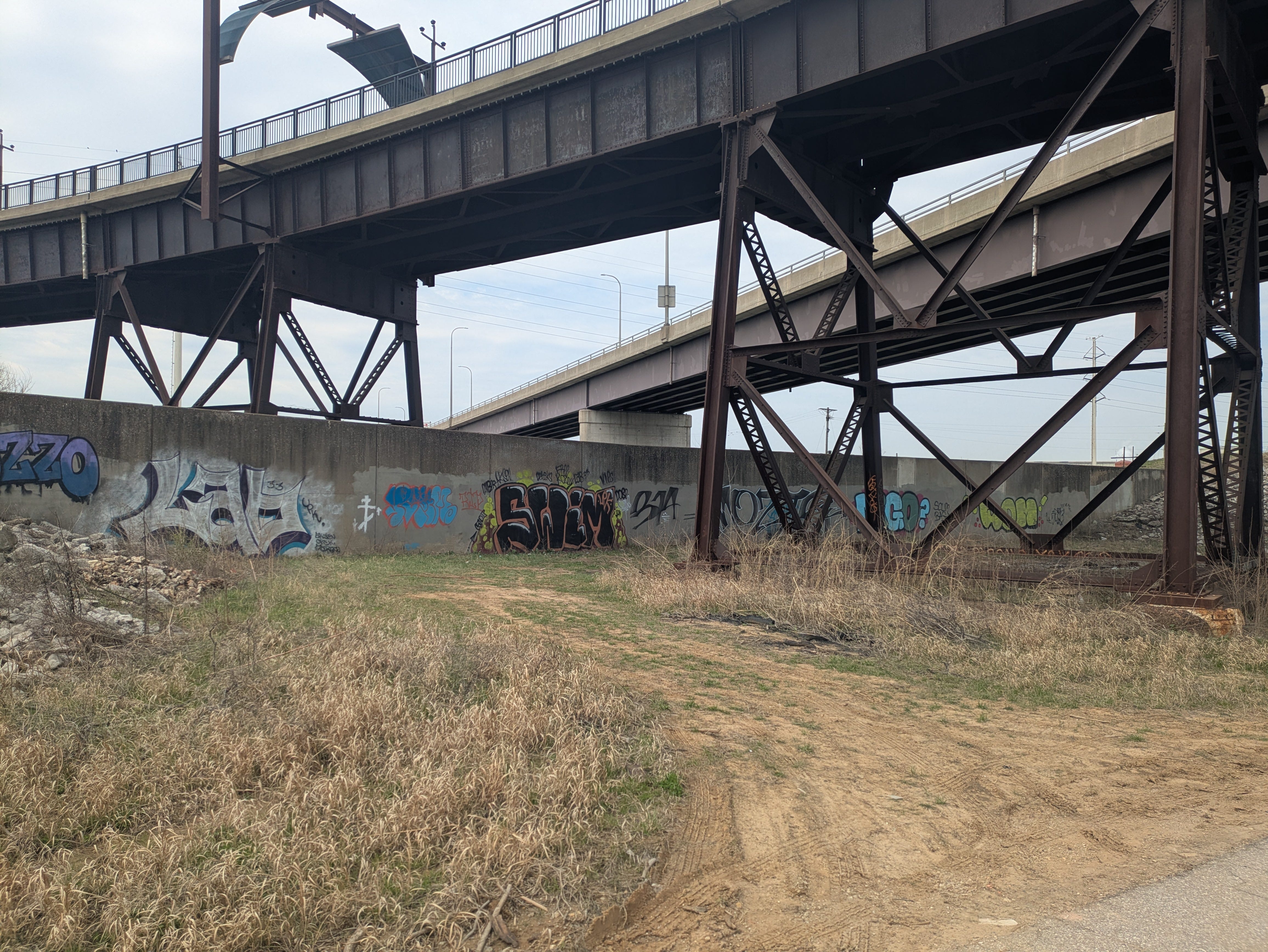
You’ll never have to jostle for space, and will almost certainly have the trail to yourself. In fact, I’d never encountered a single runner there until a few months back. Upon seeing someone approaching from the other direction I was so excited that I whipped my phone out.
“I’ve never seen anyone out here before!” I said.
“You’re the first one I saw!” the guy responded.
The city has spent over a million dollars on this trail over the years. But it’s not exactly clear where the money went.
The issues are myriad, beginning almost immediately at the trailhead by the Arch.
Now, the Arch is the most famous thing in St. Louis. It’s its own National Park, and the grounds are well-tended and full of tourists. But only a few hundred yards north the trail disappears.
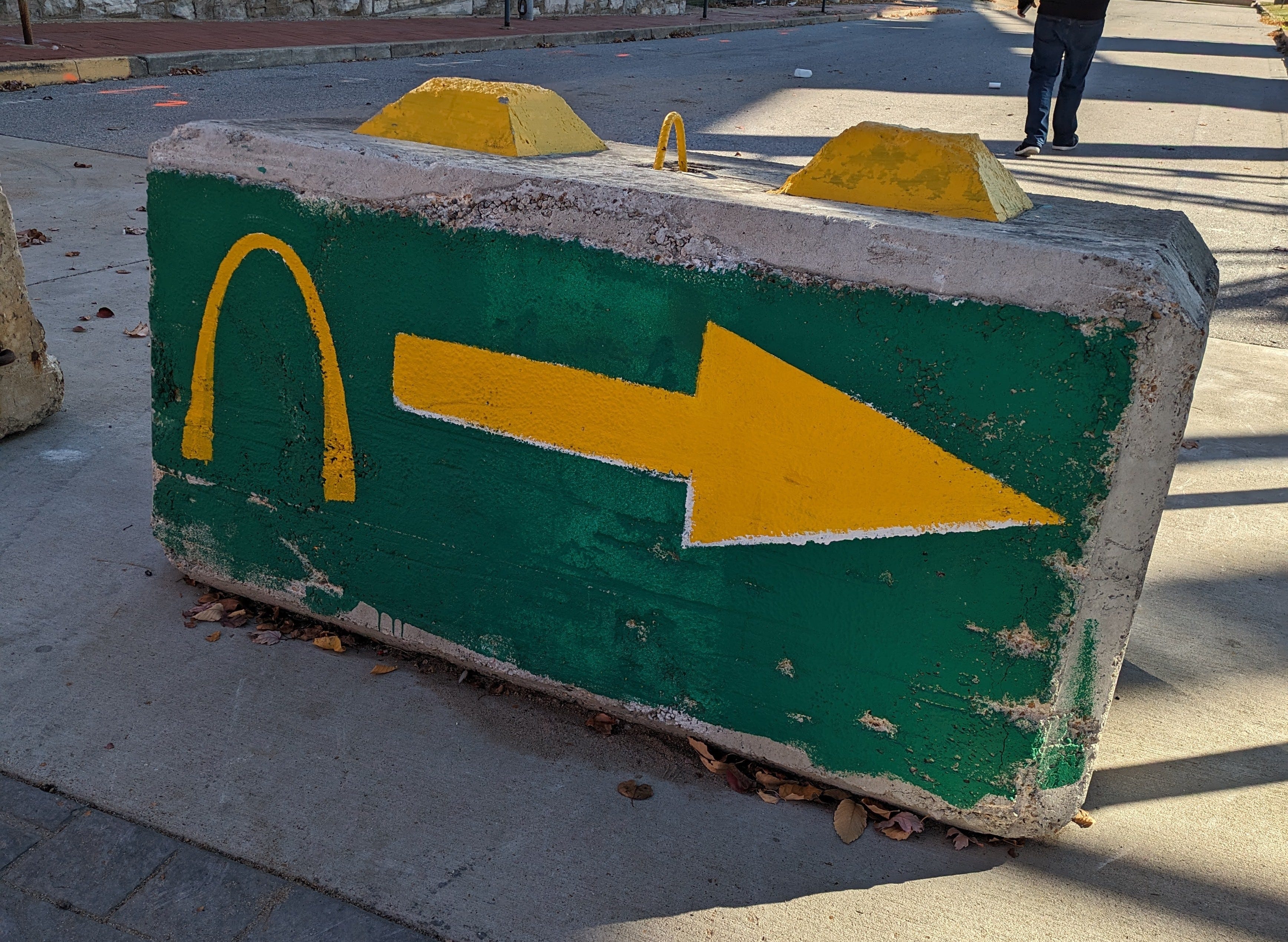
You go past a casino, around a corner and then — pow — the trail runs into a giant, impassable flood gate.
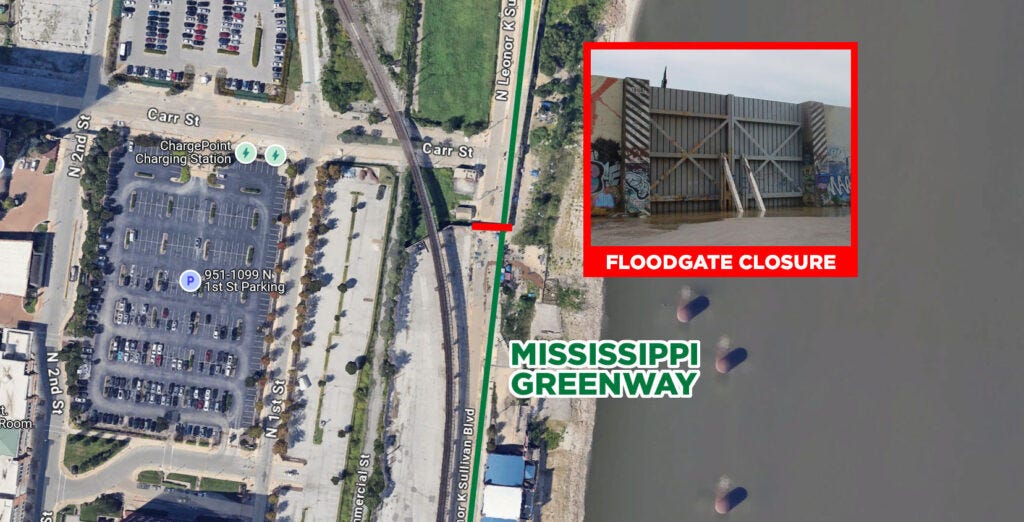
The flood gate is permanently closed. Not to prevent flooding, but rather to “reduce vandalism,” I read online, because “the controllers for the lift gates have been stolen several times.”
Um, ok. The organization that maintains the trail, Great Rivers Greenway, kindly offers a map showing the location of this closure.
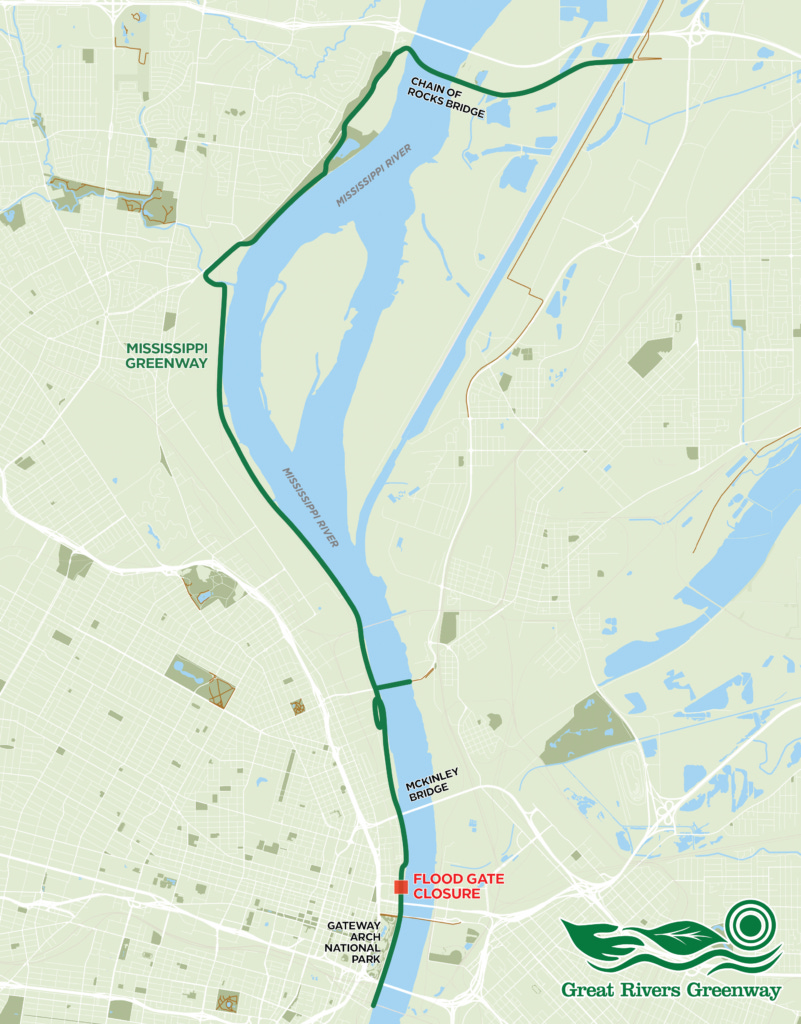
They do not, however, offer a detour.
“Visitors will need to find their own alternate route. We have previously signed a detour, but changing conditions on Laclede’s Landing and other street closures have prevented a consistent alternate route. Please use your best judgment and ability to find a way around.”
Laclede’s Landing, the surrounding neighborhood, was once a hotspot for college bars. Not anymore. Instead, “changing conditions on Laclede’s Landing” is code for “apocalyptic conditions have set in.”

The first time I encountered the flood gate I was leading my running group. “You’re gonna love this trail,” I told them as we departed the Arch grounds. “Just ignore the smell of human feces!”
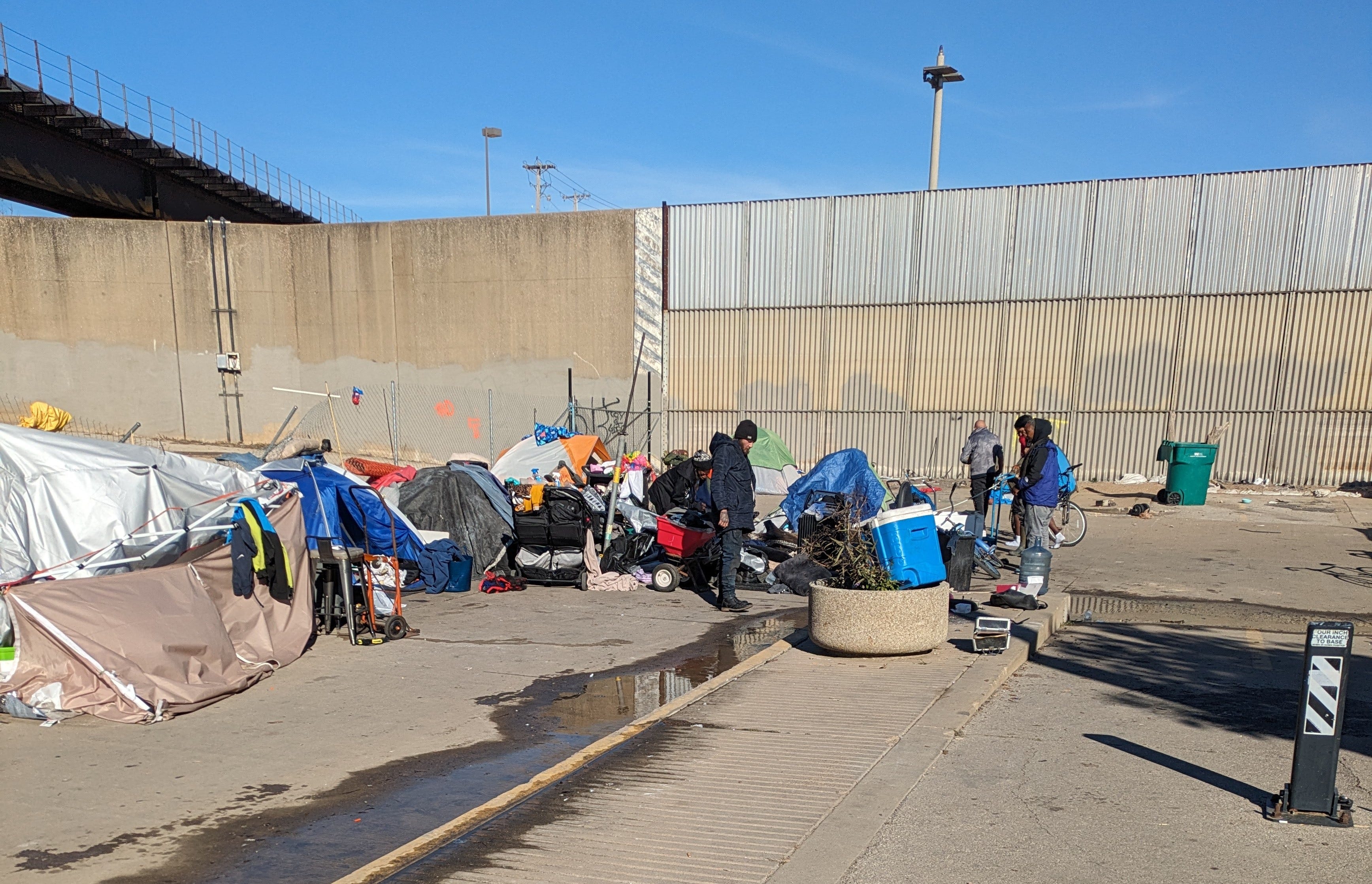
They groaned as we encountered the flood gate, but I was undeterred. “We’ll just circle around,” I said, leading us down a grass footpath near the river. This footpath gave way to trash and broken glass before depositing us in front of a large homeless encampment. We quickly turned back.
More recently I’ve discovered that the best way to run the North Riverfront Trail is not to start at the Arch, but rather at a spot called Rootwad Park, which isn’t so much a park (there’s no grass) as a permanent outdoor art installation.

Highlighted by sculptures depicting a giant turtle and a giant snake kissing each other, it was created by the genius architect Bob Cassilly, who is best known for the City Museum and who also made Cementland, where I shot a music video.
Rootwad’s structures come from repurposed materials from the nearby, long-abandoned buildings known as Laclede Power Station and Cotton Belt Freight Depot. Everything in this area is covered in graffiti, including all 750 feet of the east facing wall of the Cotton Belt building.
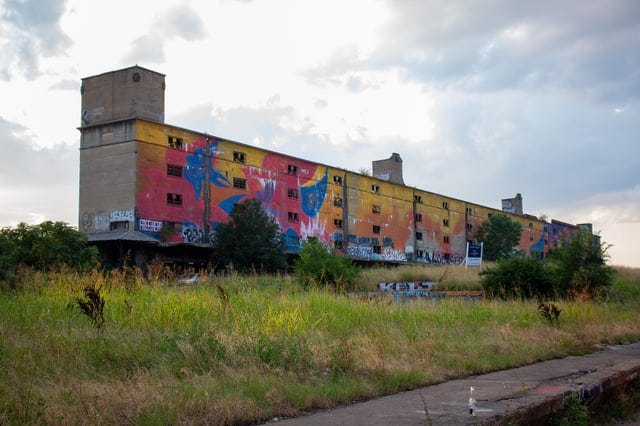
Apparently people live inside it. I haven’t snooped around, but usually there are tents set up nearby, close to where I park my car.
For that reason I don’t stash my keys in my car’s wheel well, which I usually do when I go running. Instead, I bring them with me.
Anyway, I’ve focused on the sketchy parts of this trail, but it’s otherwise a truly enjoyable course. You never know what you’re going to see. Eagles! Syringes! Burning tires!
Maybe I enjoy a little danger on my runs, or maybe I’m just not too worried about someone coming after me. What do they think they’re going to get, my goo? Plus, are these would-be assailants running sub-5-minute miles? Doubtful.
I do sometimes get sketched out, however. Recently on the trail a municipal truck pulled behind me. I don’t know why this truck was driving on the running path, nor why it didn’t speed up to pass. No one else was around, and this started making me nervous. He crept behind me for almost a mile.
I stood aside and waved for him to pass, but instead he just slowed and rolled down his window. He looked back and forth between me and his dashboard, apparently in awe of my consistency. “You’ve been going 10 miles an hour this whole time,” he said.
And then he repeated himself, just to make sure I’d heard him correctly: “Exactly 10 miles an hour!”
“Thank you,” I said, somewhat flattered, somewhat sketched out. He smiled, nodded and drove off, apparently satisfied with providing me this valuable data point. Never mind that I was wearing a piece of technology that could give me splits down to the millisecond called a running watch.
So anyway, these are the kinds of things you’ll encounter if you ever decide to run the North Riverfront Trail. I would recommend it if you’re up for a little adventure. Maybe bring some pepper spray and some nose plugs.
Safe travels!