

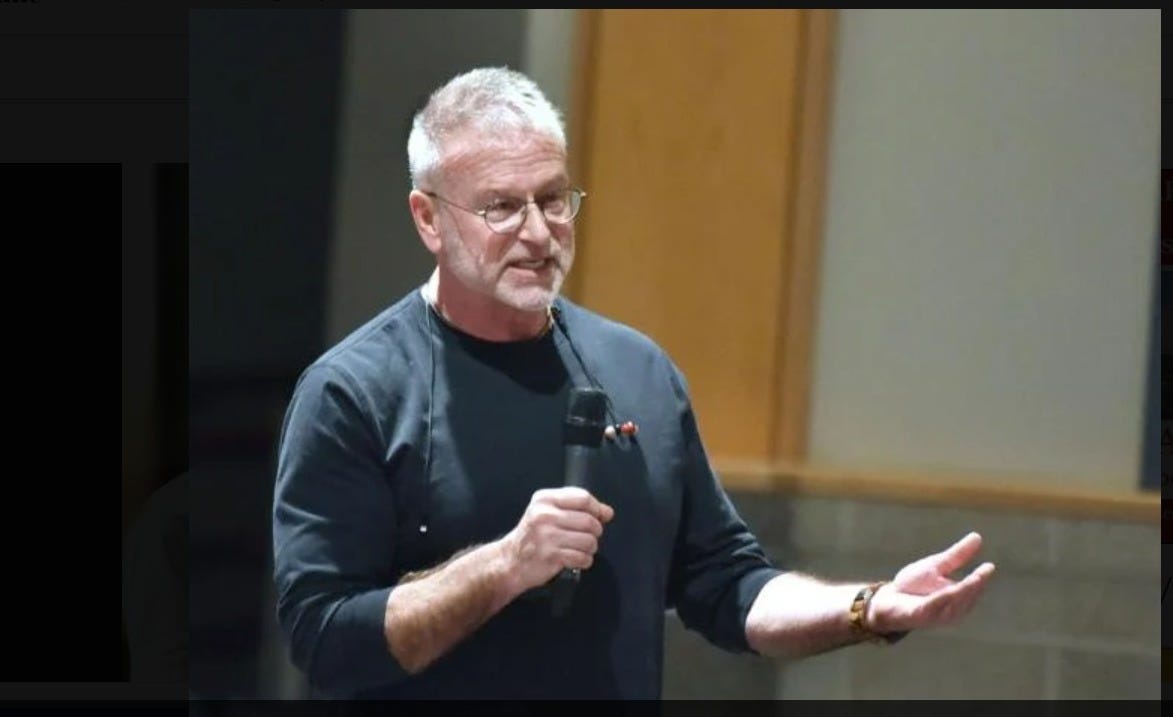
Keith Keller is an addiction nurse who understands the addiction treatment landscape, and knows how screwed up it is. In his younger years he was mired in problematic drinking and substance use himself, much of it while playing as a drummer in rock bands on Boston’s North Shore. He was a good drummer but a bad drinker, according to the bandmate who came over to his house to fire him. Eventually he found his way through, and dedicated his life to helping others fight their own battles with substances.
Having been in long-term recovery for 35 years, he’s now an addiction nurse, author, and an expert on what works and what doesn’t. I’m proud to have served as editor for his new book The Warm Hug: Substance Use and How to Fix the Failure of Treatment and Recovery in America, and to have penned the foreword. “It’s the most compelling account available about drug and alcohol treatment and recovery programs,” I write, “what they get wrong and what they get right.”
I talked to Keith about his unlikely story, and his belief that treatment and recovery should be as free and available to everyone as an emergency room visit.
Ben Westhoff: Did playing in rock bands as a kid fuel your heavy drinking?
Keith Keller: Yes. In the 1970s, the sex, drugs, and rock and roll culture was still very much a part of music. So as a teenager, I would literally be out on school nights playing in bars with older fellow musicians, getting paid in drinks.
Wow. In what grade?
Freshman year, 15 years old. It just felt like, how wonderful is this? We were playing local schools and clubs. Later, in my 20s, I was in some interesting bands, on the local and even national scenes. We’d play larger places including a famous nightclub in Boston called The Channel.
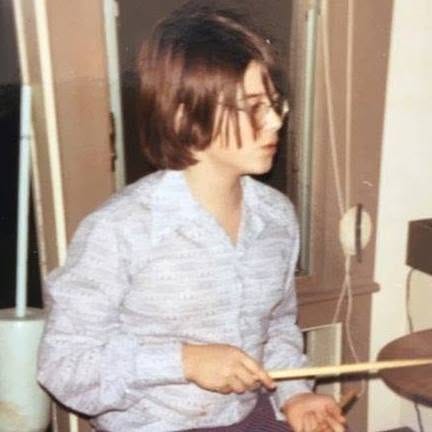
What kind of music were you playing, like Led Zeppelin covers?
In high school we just played other people’s music, but later we pushed to play our own songs and work toward a major record label deal. I was in this really cool band in the mid-to-late ‘80s, and we kind of sounded like Dave Matthews crossed with Sting, a little bit ahead of our time, with unique instrumentation. I was experimenting with the leading edge of electronic percussion, which was just sort of coming down the pike.
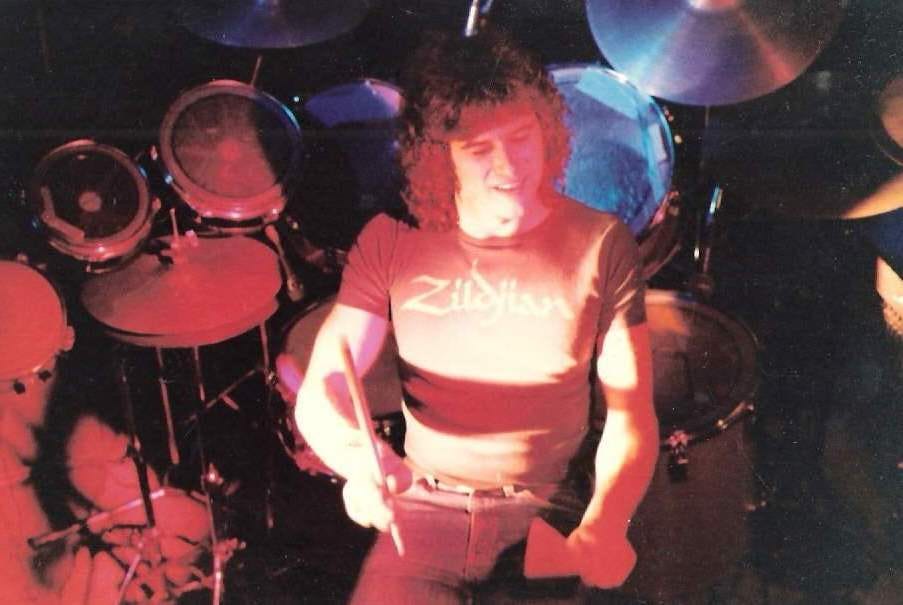
Do you think it was possible to be sober in this scene?
Oh yes, and it probably would have worked out a lot better for me in the big picture.
So let’s talk about the premise of your book. What does addiction treatment get wrong?
The current approach to treatment is very old. It traces its lineage back to an attempt by the Minneapolis welfare board to get people off of welfare. It was never about treating people for alcohol use. And, it hasn't changed in decades. It's basically an interdisciplinary team of professionals who treat people as if they come through on a conveyor belt. Very cookie cutter, very one size fits all. For detoxes, everybody gets put on a protocol, even though an individualized approach would be far superior. Detox, of course, sets the tone for the rest of the treatments that follow, and for recovery.

You’ve said things have changed very little since your own days in treatment.
Yeah, I had a week of detox treatment 35 years ago. It consisted of a little medication, a protocol, I would assume, and what we refer to as psychoeducation, which is group therapy in the form of discussion, or sharing about problems or past experiences. A facilitator reframes these in a way that educates the patient or client. And that’s exactly what’s still in use today.
When you were going through this, did it seem effective at the time?
It did not really take into consideration my state of readiness, my motivation to change, or my willingness to accept the reality of my circumstances. I was a heavy daily drinker, rapidly becoming dysfunctional. This was, in my mind, a kind of intervention for that. Like, it was here to help me solve my problems, so that I could drink again!
I was in a state we could refer to as somewhere between pre-contemplation and contemplation. I couldn't admit I really had a problem. But the walls were starting to crack.
Did you have a “rock bottom” moment that compelled you to take action?
Yeah, but not immediately. I was introduced to Alcoholics Anonymous and said okay, there must be something I can extract from this and figure out how to go back to normal drinking. So I continued drinking, yet trying to control it, for 3 or 4 months. And then I did reach a rock bottom, the result of being off work for 10 days, drinking around the clock. It was a disaster.
The pivot point was a very distinct light bulb moment, where I realized I'd been deluding myself. Once I woke up to that, I jumped into recovery with both feet. Now, when I was doing this in the early '90s, Alcoholics Anonymous was really the only viable option for significant support. They had a plan. I didn't.
It sounds like you're grateful in some ways, but you believe AA is not the only way.
I engaged with it out of necessity. I did the work and really reaped the benefits. Five years down the road, I went to nursing school, graduated, bought a house, quit smoking, and started working out. I was, like, a new version of myself, I had a little more bandwidth, and then I started to question [AA].
I realized, wait, it's not like that for everybody. I had a little survivor’s guilt, I guess. And I really started thinking: What could we be doing better? How can I help the next person? How can we do better for everybody?
By the time I was around 10 years sober, I was starting to outgrow the vessel of Alcoholics Anonymous. I started studying energy medicine and alternative healing and holistic perspectives. While I kept one foot in AA, I started to move beyond. That was my personal path toward wider understanding. Enlightenment, I guess. I integrated that into my personal recovery.
The next thing came about almost 15 years ago where I stumbled onto this neuroscientist guy, and started doing his work. I learned how to meditate, and that made a big difference. It just lit a fire under my ass.
For many people the traditional 12-step model is not easy. What do you think these people need?
Great question. I'm often in the position of explaining recovery to people who know nothing about it. Do I have to go to a meeting every day for the rest of my life? Am I going to be micromanaged by a sponsor? Am I going to live in fear of failure for the rest of my days? And the answers to those questions are no.
Asking why people do go to those meetings is a better question. I think there are five elements that sustain a healthy and stable recovery.
12-step programs are a ready-made source of community. They will likely support you unconditionally.
They know a lot about addiction and recovery, and knowledge is a very important piece.
They suggest you have a mentor. Now, that's not somebody to boss you around or micromanage you. That's a role model, somebody with more experience than you have, and you make yourself accountable to that.
Then there’s service. There are actual studies that have shown that physiologically we get a neurochemical boost out of helping others.
The last thing — and this is the sticky one — is that they encourage a belief system. In AA, it’s a belief in a higher power or spirituality. But I think at some point we all ask ourselves the larger questions: What's the meaning of life? Addiction in my life? Recovery in my life? And asking those larger questions will take you toward some understanding.
So those five elements — community, knowledge, mentoring, service, and a belief system — I think are what people need to sustain a healthy and stable recovery.
Ok, very cool. Now, could you tell us about your job on a day-to-day basis?
I’ve been a nurse for 30 years and devoted much of that to substance use disorder or behavioral health-related endeavors. I’ve worked in inpatient detox, clinical stabilization, outpatient things like methadone dosing, intensive outpatient facilitation, community mental health. And all of these have prepared me for what I’m fortunate enough to do now, which is to travel and manage complicated addiction treatments in various parts of the country.
Let’s talk opioid treatment, because that's also a focus in your practice and your book. What would you change if you had a magic wand?
We need to individualize treatment. We need to modify how we do things, starting with the detox process on through to clinical stabilization and treatment plans.
We need to be tailoring treatment to the individual who is not going to move forward until they understand the stage of change that they're in.
External force does not do that. Applying pressure or putting people on the hot seat does not do that. People do this at their own pace. So, instead of diverting their energy into sort of a defense mechanism — “Everybody's telling me I need to change, so I’m going to pump the brakes” — their mental energy would be freed up to ask themselves, “What is going on? What are my problems? What needs to change?” Rather than defending their right to be using drugs and alcohol.
I would also incorporate the philosophy of the evidence-based approach, motivational interviewing, which encourages people toward their personal concept of recovery, as opposed to projecting an established ideal of what recovery should be. Utilizing and teaching basic principles of neuroscience provides better learning. Helping people to understand how change occurs supports better change.
Tell me about what you call your Universal Addiction Treatment Initiative.
Well, 48.7 million people meet criteria for substance use disorder. But 93% of them don't get any treatment. Of the ones that do, less than half will complete treatment, and of the ones that complete treatment, less than half will succeed in recovery.
At various stages in our history, the authority structure has stepped in to help manage public health crises. We saw that recently with COVID.
My experience in the hospice industry comes to mind. In 2008, they got rid of all the abuses. So I'm thinking in terms of a new structure to the way things are done. This could be mandated, and I think it’s long overdue.
You noted that, if someone gets dropped off at an emergency room, they have to be treated, by law. Might that be another template?
That's another good example.
So, if someone has issues with substance use, you’re saying they should have a universal right to receive treatment?
Yeah, that is kind of where I'm taking this. Not only should they receive treatment, but this treatment should be rendered by facilities and organizations that are more invested in successful outcomes, rather than the potential for admitting somebody over and over again.
I like that. Last question: Who is your book for?
My target audience is anyone who has been affected directly or indirectly by substance use disorder or addiction. Anybody in the community who would benefit from better understanding this chronic medical condition that affects maybe as many as 1 in 6 people in their community. It’s for anyone in the treatment field interested in learning the latest approaches. And I hope it’s for people in the authority structure who are in positions to serve the greater good.