
Trying To Help Poor People
It's not easy!

So many things to worry about. Politics. Climate. The future. But what I worry about most are poor people. People who have pressing needs right now, who are addicted to drugs or don’t have shelter or a job or hope.
How to help these people? Many nonprofit organizations in this realm have valiant missions, but which can be trusted? The other day at the grocery store I consented to “round up” for Urban League, to whom I’ve donated more substantial amounts in the past.
I have followed the organization for years and even once interviewed the CEO of the local chapter for a story. But I never looked into how efficiently they spend their money.
So let’s look.
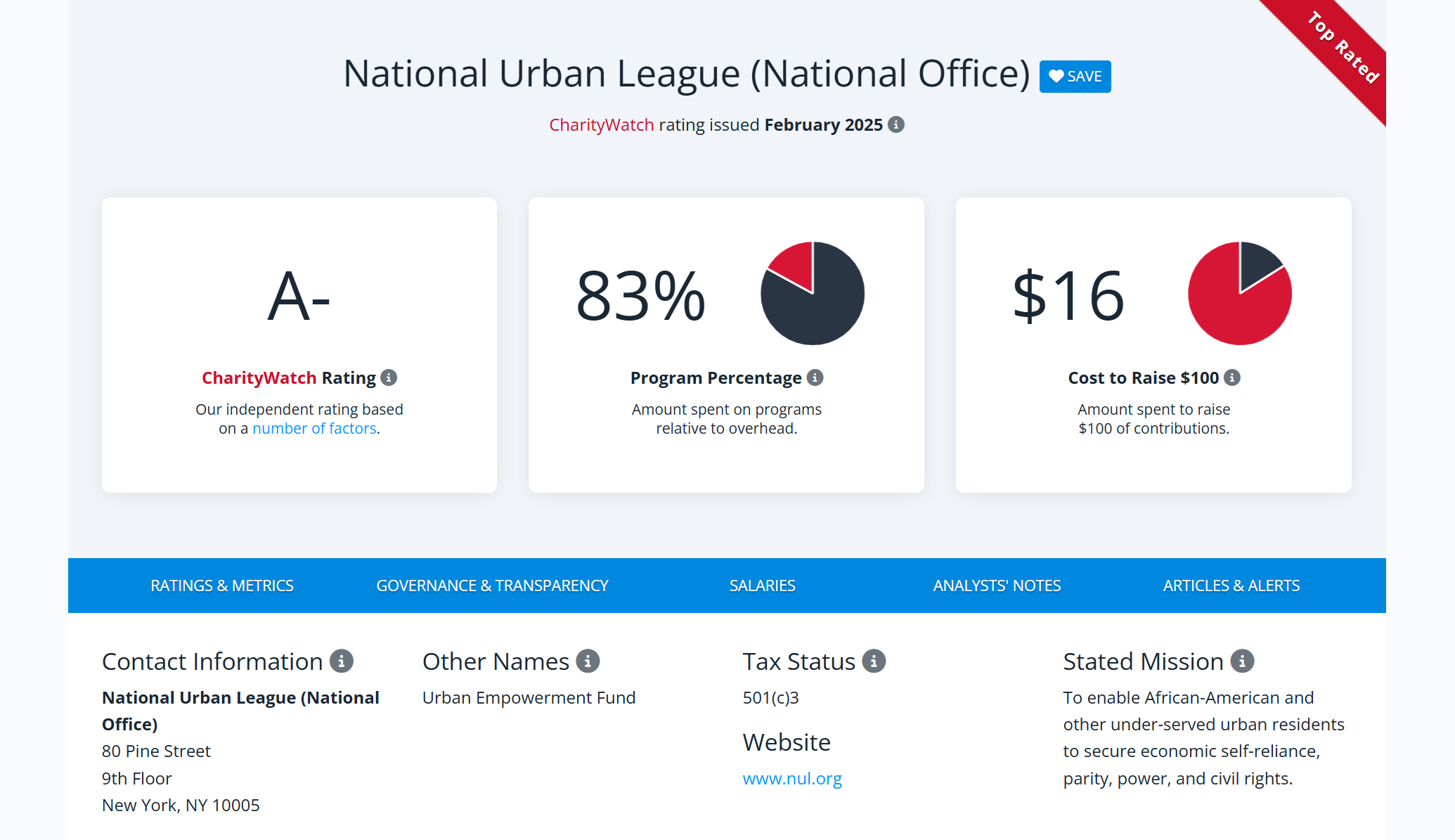
Not bad, right? “Top rated.” Seemingly low overhead. A- is a pretty good grade. Higher than my GPA!
But the fine print, specifically their “Stated Mission” gives me pause. Securing economic self-reliance, parity, power, and civil rights for African-Americans sounds great, but what does this entail in practice?
Who is receiving money towards “power,” for example?
I see they partnered with former U.S. Rep Cori Bush in 2024 to secure federal funding for the renovation of their main facility in North St. Louis, called Urban League Plaza. I also see that, while the organization doesn’t donate directly to political candidates, its members have given money to Cori Bush and other Democrats.
I didn’t vote for Bush in 2024, I voted for her Democratic rival, Wesley Bell, who unseated her in the primary and then won the general election. But no matter; I’m more concerned with what Urban League is doing on the ground.
Turns out they’re building an African American history and arts museum in the plaza, but its status is unclear. (I just called over there and the receptionist said, “It won’t be open this year.”)
One of the organization’s other big facilities, however, has been open for almost a decade. The Ferguson Community Empowerment Center was built on the site of the former QuikTrip that was burned to the ground in 2014 following the killing of Michael Brown.
I went there a few years back with Jovan Cleveland, the brother of Jorell, my mentee from the Big Brothers, Big Sisters program whose life and death I chronicled in Little Brother.
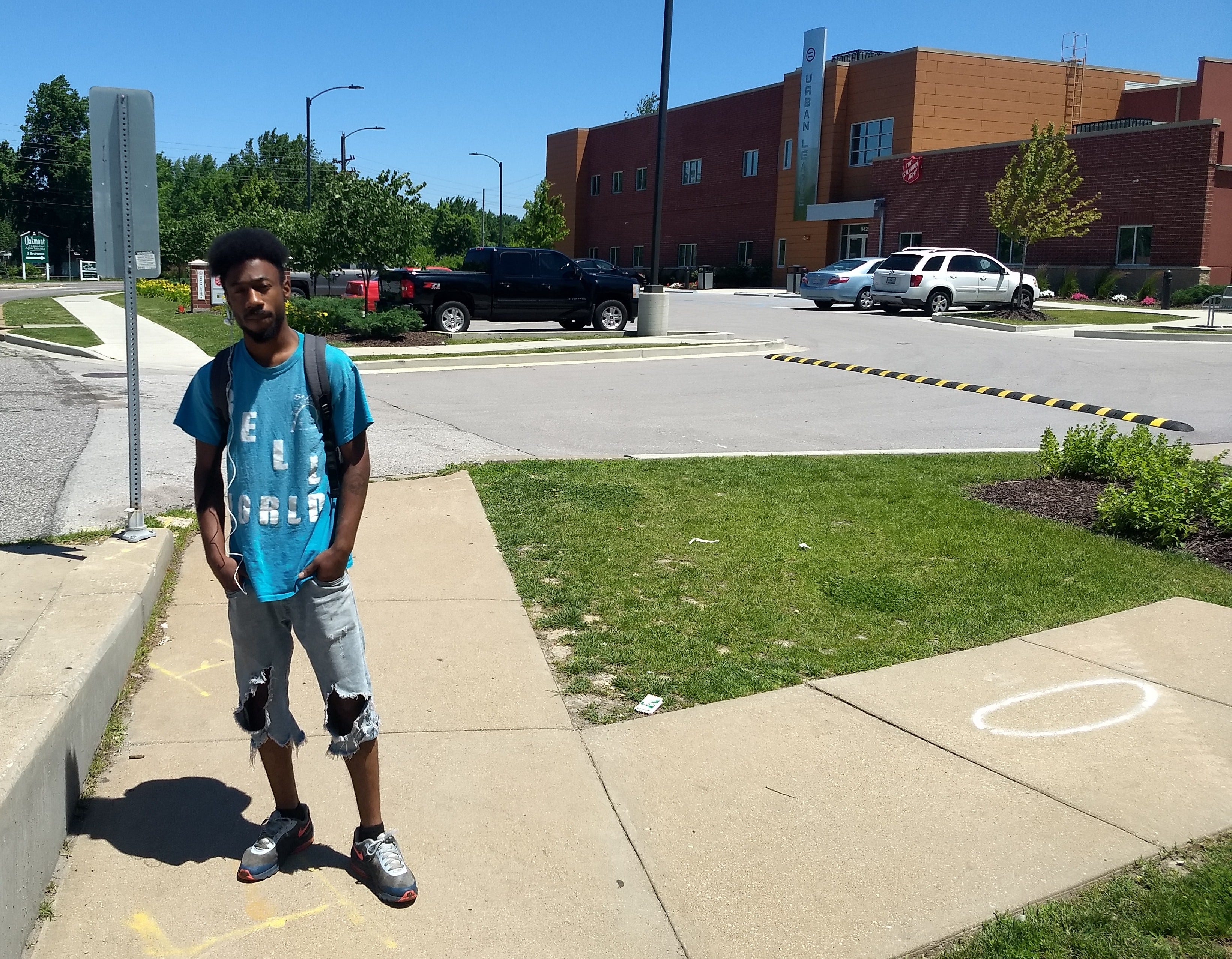
It’s a beautiful facility, heavily air-conditioned. We went to enroll Jovan into a job placement program, and everyone working there was very nice.
They had a whole room of suits, ties, and belts that had been donated, so applicants could look their best. They let Jovan try some on. They took his information, told him to remove references to drugs and guns from his Facebook page, and urged him to return in a couple of weeks for a jobs-skills class.
And then that was that. Jovan never followed up with them and, as far as I know, they never followed up with him.
Listen, I’m not trying to discredit this organization. I know they do lots to help the community. But, from the standpoint of efficiency, I’d like to know where my donation money is going.
According to Urban League St. Louis’ 2022 financial statement (the most recent one available on their website), their biggest expenses that year were salaries ($11.6 million) and “assistance to individuals” ($10.7 million).
There were also “professional fees” ($3.5 million), “occupancy” ($3.2 million), “supplies” ($2.9 million), and “telephone” ($640,000).
Considering that their total support and revenue for the year was $44.6 million, they do not seem incredibly efficient in their charity.
Again, I am certain all of these expenses were completely legitimate, completely normal operating costs for a nonprofit that is doing good work.
But that’s a ton of money on admin stuff, especially for tiny St. Louis.
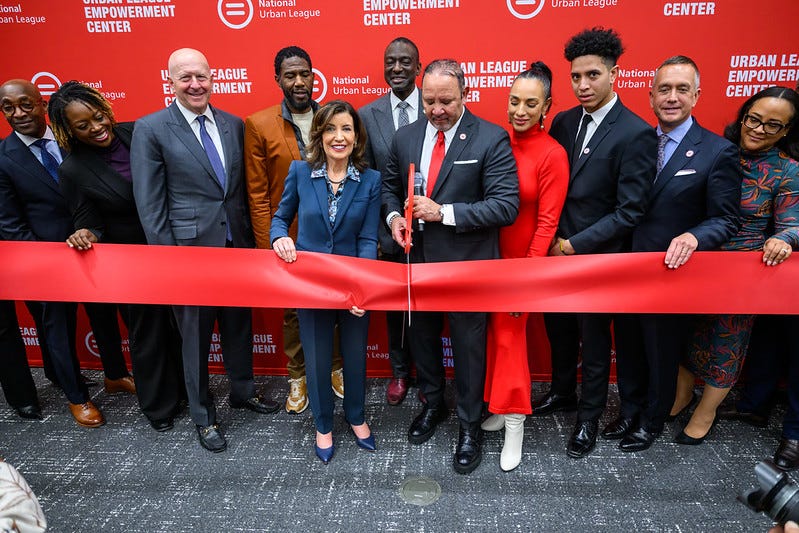
The national organization, meanwhile, has a brand new $242 million facility in Harlem, a “414,000-square-foot hub that blends housing, history, and hope.”
That sounds totally grand. And I’m glad the people in the photo above have jobs helping people.
But I don’t want to pay their salaries. I don’t want my money to go to c-suite executives and politicians and contractors and administrators. I want to help poor people directly.
And that’s where it gets tricky…